

By Mike Zacha, Founder, Zacha Tax Resolution · 27 years in tax resolution
Even after the IRS has taken money from your paycheck or bank account, federal law gives you specific rights. You can request an IRS levy release, keep the exempt part of your wages, and, in some situations, get seized funds back. If you’re trying to work out how to stop IRS wage garnishment, those rights are where you start.
By the time someone calls me after a levy, they often feel like there’s no hope left and the IRS has backed them into a corner. I understand why. Opening a paycheck that’s a fraction of what it should be, or finding your business account frozen, is a shock. But I’ve walked a lot of people through this exact moment, and the first thing I tell them is that a levy isn’t the end of the road. The law lays out a clear process for getting it released, and even taxpayers who owe money have rights.
Below, I’ll walk you through when the IRS must release a levy, how much of your paycheck the law protects, and what to do this week.
Key Takeaways
- Under federal law, the IRS typically releases a levy in several situations, including economic hardship and an approved payment plan.
- Part of every paycheck is exempt from a wage garnishment, and the exemption form you return to your employer decides how much you keep.
- A bank holds levied funds for 21 days before sending them to the IRS, which gives you a short window to act.
- An IRS levy release must be requested. Your employer can’t stop the garnishment until the IRS sends a formal release.
- A released levy stops the collection, but the tax debt still needs a plan.
When is an IRS Levy Release Required?
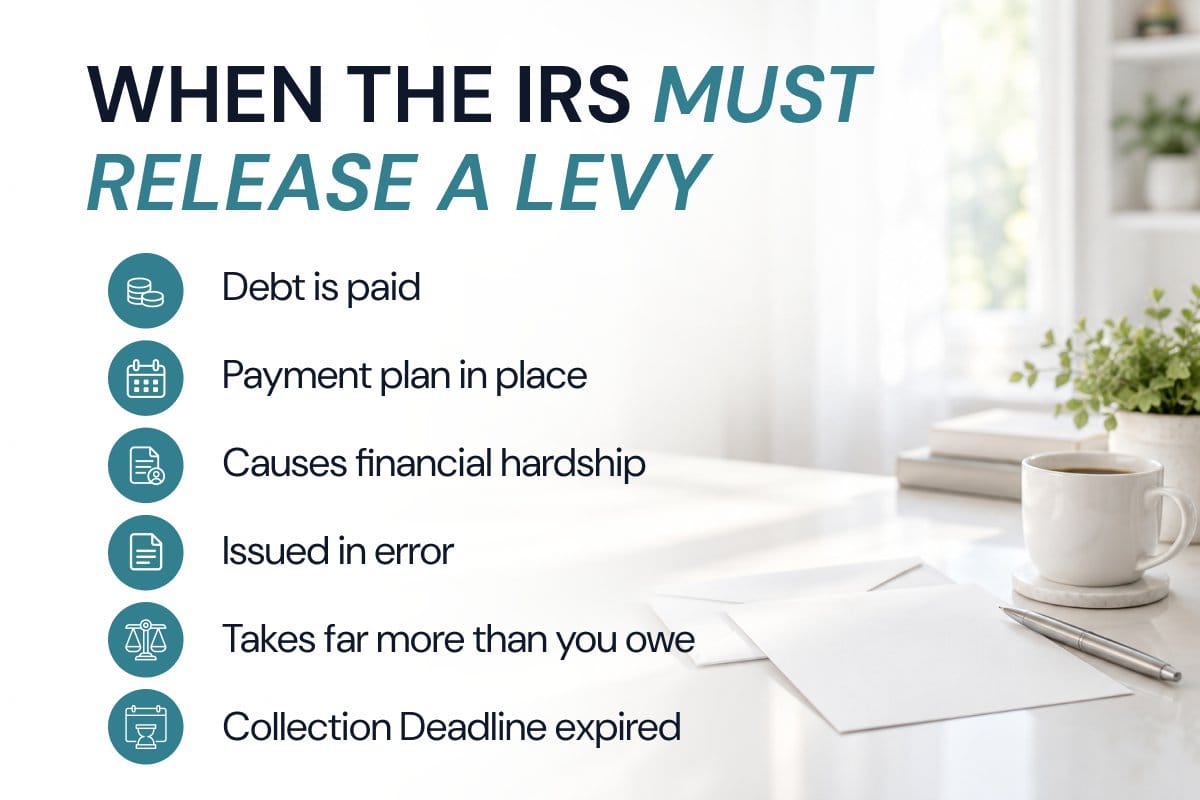
Under Internal Revenue Code Section 6343, the IRS is required to release a levy when certain conditions apply. Knowing which one fits your situation tells you what to ask for.
You’ve Paid the Debt, or It’s Been Satisfied Another Way
If you’ve paid the tax in full, or the liability has been satisfied in some other way, the levy must be released. One example is an overpayment from another year being applied to the balance.
You’ve Set Up an Installment Agreement
An installment agreement is generally grounds for release, unless the agreement’s own terms say otherwise. The IRS usually prefers a workable payment plan to an active levy, because a levy makes it harder for you to keep up with payments. If your payment plan request was turned down, read what to do when an installment agreement is rejected.
The Levy Is Causing Economic Hardship
This is one of the most common and effective grounds for release. If the levy leaves you unable to cover basic living expenses like housing, utilities, food, and essential transportation, the law treats that as a reason to release it. The IRS uses this path regularly, so it’s worth pursuing seriously.
You’ll need to document your income and necessary expenses so the IRS can evaluate the hardship. The clearer and better supported your numbers are, the stronger your request will be.
The Levy Was Issued Improperly
A levy can be challenged if the IRS skipped a required step. That includes issuing it after the collection statute of limitations expired, or without properly sending the required notices first. Before most levies, the IRS must send a final notice and give you 30 days to request a hearing. You can read more about how the final Notice of Intent to Levy works.
The Levy Takes Far More Than You Owe
If the value of the property levied is significantly higher than your balance, that imbalance is itself grounds for a full or partial release.
How an IRS Levy Release Actually Happens
No IRS levy release happens automatically. You generally have to request one, and the IRS will usually expect your tax returns to be filed before it agrees. It also helps to have your income and expense documents ready, since the IRS often asks for them.
Once the IRS approves your levy release, it sends a formal release of levy (Form 668-D) to your employer or bank. Your employer can’t stop the garnishment on its own, even if you ask. Only the IRS can issue the release.
Find Out Which Levy Release You Qualify For
How to Stop IRS Wage Garnishment from Taking More Than It Should
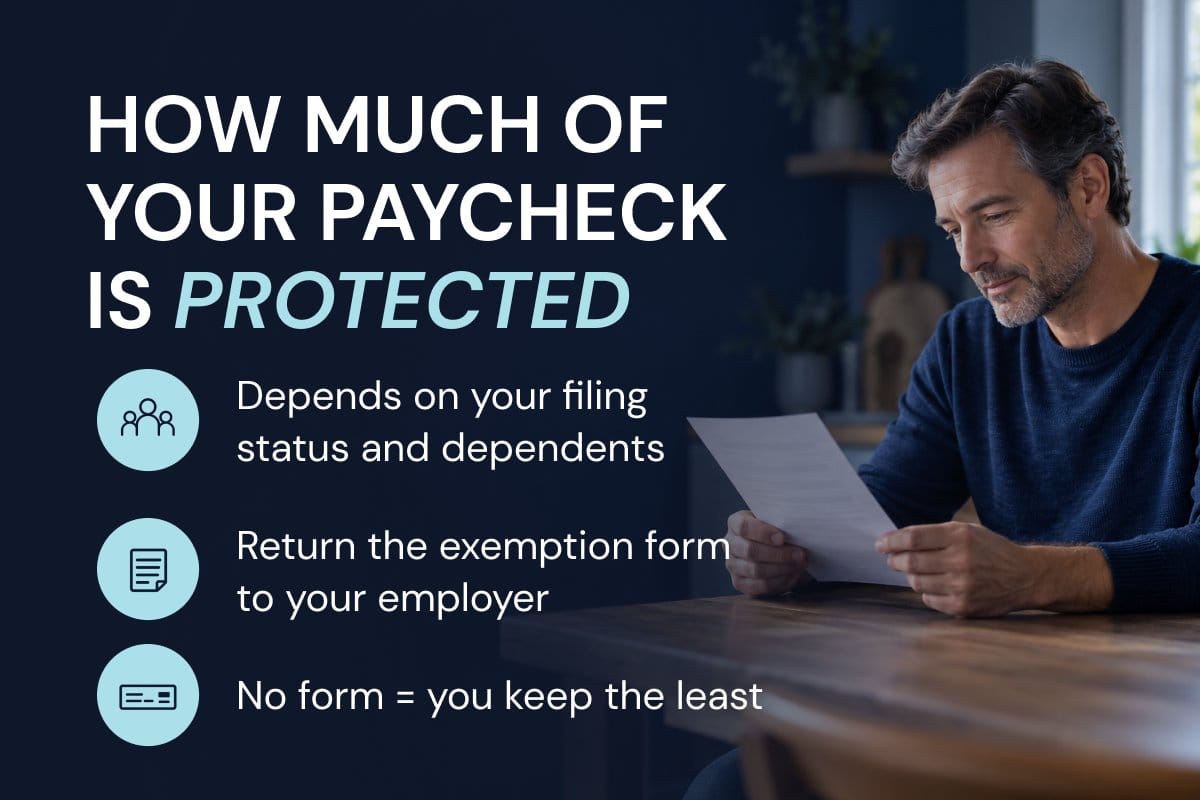
If your wages are being garnished, federal law guarantees that part of your paycheck stays with you. The exempt amount depends on your filing status and number of dependents, using tables the IRS publishes each year in Publication 1494.
Your employer is required to give you a statement, usually included with the garnishment paperwork, so you can claim the exemptions you’re entitled to. You fill in your filing status and dependents and return it.
I can’t tell you how many times I’ve seen this cost people money. If you never received, completed or returned that statement, the exemption is generally figured as if you were married filing separately with no dependents. That’s the lowest amount, so a bigger share of your paycheck gets taken than the law requires.
If you’re not sure the form was filled out right, check with your payroll department. If they can’t sort it out, the IRS can. It’s worth the phone call, because it changes how much of every paycheck you take home.
What About an IRS Bank Levy Release?
A bank levy works differently. It’s a one-time hit on the balance in your account on the day the bank receives it, and there’s generally no built-in exemption the way there is for wages.
By law, the bank does have to hold the frozen funds for 21 days before sending them to the IRS. That gives you a real window to request a release before the money is gone. If your account hasn’t been hit yet, here’s how to keep a bank levy from going through.
Can the IRS Levy Social Security or Retirement Accounts?
Social Security benefits can be levied through the Federal Payment Levy Program, generally up to 15% of each payment. This levy comes with its own notice requirements and, in some cases, its own hardship considerations.
Retirement accounts, including 401(k)s and IRAs, can also be levied. There’s generally no built-in exemption protecting part of a retirement account the way Publication 1494 protects part of your wages. That makes a hardship release or a payment plan especially important to explore before a retirement levy takes effect.
Before You Call the IRS, Be Prepared
Most people’s first instinct is to pick up the phone and explain. I understand that, but go in prepared. What you say becomes part of your file, and the person on the other end is there to collect.
An offhand comment about money you could borrow from family, or a retirement account you could cash out, can shape what the IRS asks of you next. Have your income and expense numbers in front of you, and stick to the facts of your situation.
What to Do Right Now
These steps will help you get the right release moving as quickly as possible.
- Identify the type of levy or garnishment. Wage garnishments and bank, Social Security and retirement levies each work differently, and your options and timing depend on which one you’re facing.
- Gather your income and expense records. You’ll need them for a hardship request or a payment plan, whichever fits your situation.
- Check your wage exemption statement. Make sure your employer has it and that it shows your correct filing status and dependents. This can change how much of your paycheck you keep.
- Look for signs the levy was issued improperly. Missing notices or an expired collection deadline can change your options.
- Contact the IRS promptly. A levy that’s already in place generally won’t go away by itself, so request the IRS levy release you qualify for.
- Ask for help if you’re stuck. If you’re facing serious hardship and getting nowhere through normal channels, the Taxpayer Advocate Service, an independent office within the IRS, may be able to help. You can request its help using Form 911.
How Zacha Tax Resolution Helps
When you call, I’ll go through your levy with you myself. I’ll look at what’s being taken, which release you may qualify for, and what your numbers can support, and you’ll leave with clear guidance on what to do next. Then you’ll get your strategy and our fee in writing before you decide anything.
From there, a Licensed Professional reviews your case a second time to confirm the strategy is the right fit, then handles your representation and works with the IRS to get the right release in place.
Request a Free Consultation
The Bottom Line
Being levied is about as far as the IRS goes with most people, and it’s also where the law gives you the clearest protection. I’ve spent 27 years helping people use it. Call me, tell me what’s been taken, and I’ll help you determine which release you qualify for. You’ll get the strategy and the fee in writing before you decide.
Frequently Asked Questions About an IRS Levy Release
These are the questions I hear most from people who’ve already been levied.
Can I get back money the IRS already took from a bank levy?
In limited situations, yes, for example if the levy was issued in error or the IRS skipped a required step. Once the money has been sent to the IRS, getting it back is much harder than stopping the transfer during the 21-day hold, so it pays to act inside that window.
Does a wage garnishment take my entire paycheck?
It only takes the non-exempt portion. The exempt amount is set using Publication 1494, based on your filing status and dependents, and it’s yours to keep while the garnishment is in place.
If I set up a payment plan after being levied, does the levy stop right away?
An installment agreement is generally grounds for releasing the levy. You still need to request the release, and it takes time to process, so it doesn’t happen the moment the agreement is approved.
Can my employer stop the garnishment if I ask?
No. Your employer is legally required to keep withholding until it receives a formal release from the IRS. Talking to payroll is still useful for checking your exemption statement.
Does a levy release mean my tax debt is gone?
No. A release stops that levy, but the balance remains. If the debt isn’t resolved with a payment plan, hardship status, or another option, the IRS can levy again later.
Get Your Free Consultation
This article is for general informational purposes only and is not a substitute for advice about your specific situation. Nothing in this article guarantees any particular outcome, including release of a levy or recovery of seized funds. Results depend on the specific facts of your case and the law in effect at the time. Zacha Tax Resolution’s representation services are provided by a Licensed Professional authorized to represent taxpayers before the IRS under Treasury Department Circular 230. If you’ve been levied and aren’t sure what rights apply to you, Zacha Tax Resolution can help you sort through your options.