

By Mike Zacha, Founder, Zacha Tax Resolution · 27 years in tax resolution
Can the IRS take my house for back taxes? Technically yes, but it’s rare and it’s hard for the IRS to do. Your principal residence can’t be seized without a federal court order, and no home that someone lives in (other than a rental) can be seized for a levy of $5,000 or less. Over the last five fiscal years, the IRS conducted an average of 75 seizures of any kind per year nationwide, according to the Treasury Inspector General for Tax Administration.
When someone asks me whether the IRS can take their house, they’re usually holding a letter that mentions a lien or a levy and imagining the worst. In 27 years, I’ve personally reviewed roughly 10,000 tax debts. One of the most common mix-ups I hear is confusing a tax lien with a seizure. They’re very different, and knowing which one you’re facing changes what you should do next.
Key Takeaways
- An IRS tax lien is a legal claim against your home, not a seizure of it.
- The IRS can’t take your house to collect a levy of $5,000 or less.
- Above that amount, the IRS needs a federal judge’s written approval to seize your principal residence.
- Home seizures are rare, while wage garnishments and bank levies are far more common.
- A payment plan or other resolution can stop the problem long before it reaches your home.
What Is an IRS Tax Lien, and Does It Mean You’ll Lose Your House?
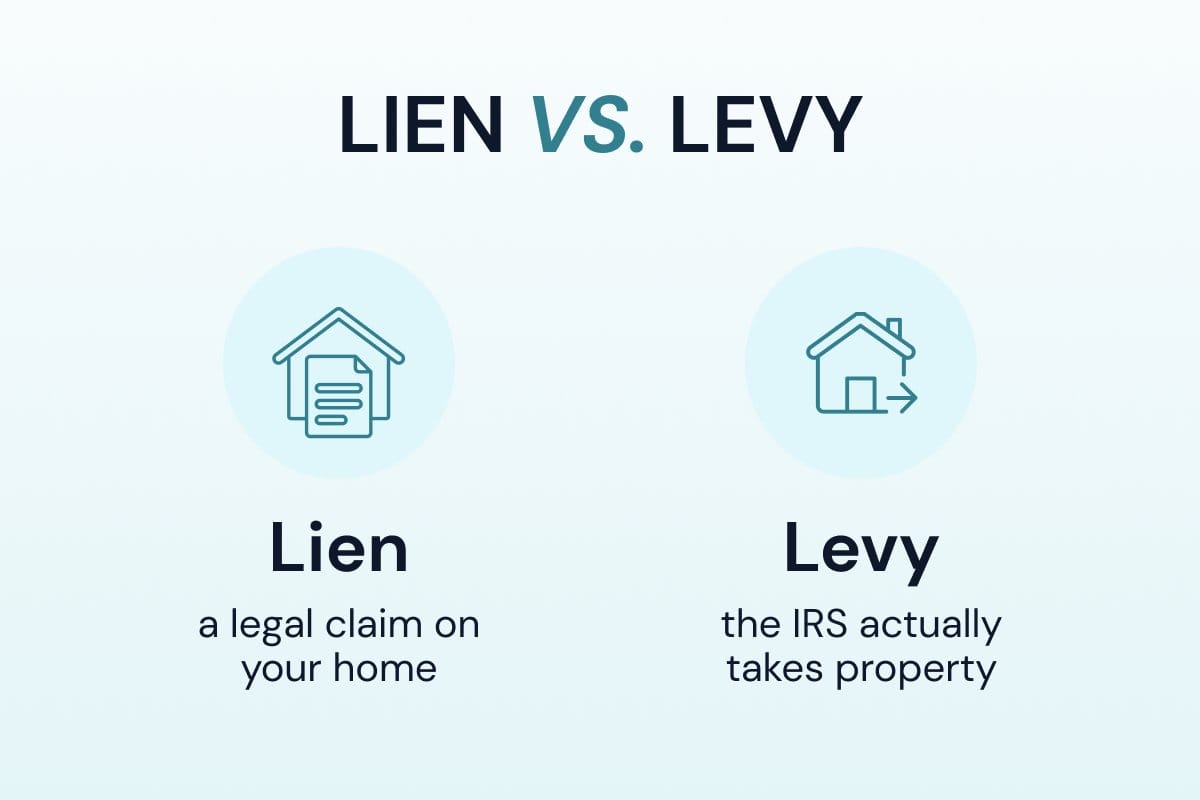
A lot of fear around this question comes from mixing up two very different actions.
A federal tax lien arises automatically once the IRS assesses the tax, sends you a bill and you don’t pay it in full. It attaches to everything you own, including your home. If the IRS files a Notice of Federal Tax Lien, that claim becomes public record.
A lien can make it harder to sell or refinance, because it usually needs to be settled at closing. But a lien on its own doesn’t mean the IRS is taking your house or forcing you out. It’s a claim, not a seizure.
A levy is different. It’s the actual taking of property to pay the debt, and for a home that means a seizure and sale. That’s the step people are referencing when they ask whether the IRS can take their house, and it’s also the step with the most legal protection.
Can the IRS Take Your House? The Legal Protections for Your Home

Federal law puts real barriers in front of a home seizure. Here’s what stands in the way.
No Home Can Be Seized for $5,000 or Less (Unless It’s Rented Out)
Under Internal Revenue Code Section 6334, the IRS can’t seize real property used as a residence by you or anyone else if the levy is for $5,000 or less. The one exception is property you rent out to tenants.
A Federal Judge Must Approve It
Above $5,000, the IRS still can’t seize your principal residence on its own authority. It needs written approval from a judge or magistrate of a U.S. District Court. Congress added this check in 1998 because taking someone’s home is about as serious as collection gets.
The IRS Needs to Show There’s No Reasonable Alternative
In that court process, the IRS generally must show that the tax is owed, that it followed every required procedure and that there’s no reasonable alternative for collecting the debt. That last point matters. If a payment plan or a levy on other assets could reasonably cover what you owe, that weighs against seizing your home.
Before a levy, the IRS will send a final notice that gives you 30 days to request a hearing. If you’ve received one, read what to do after a Notice of Intent to Levy.
How Often Does the IRS Actually Take Someone’s House?
Rarely. If you’re worried the IRS will take your house, this number should help. The IRS conducted an average of 75 seizures a year over the last five fiscal years, and that figure covers every kind of property, not just homes.
The Treasury Inspector General calls seizing and selling a home one of the most significant enforcement actions the IRS can take, and notes that the IRS generally resolves debts by less intrusive means.
The balances behind those seizures are also telling. In the 49 seizures TIGTA reviewed from July 2024 through June 2025, the taxpayers owed an average of nearly $2.2 million. Most people with back taxes are nowhere near that situation.
What’s More Likely to Happen if You Owe Back Taxes
If back taxes go unresolved, these are the realistic risks:
- A filed tax lien that complicates selling or refinancing your home.
- A wage garnishment that takes part of every paycheck until it’s released. If one has started, here’s how an IRS levy release works.
- A bank levy that freezes what’s in your account on the day it arrives. If your deadline hasn’t passed, learn how to prevent a bank levy before it happens.
- Ongoing notices, with penalties and interest growing the whole time.
These are still serious and worth dealing with early. But they’re a very different reality from losing your home.
Talk to Us Before It Reaches Your Home
IRS Tax Lien Release, Discharge and Other Ways to Deal with a Lien
If a Notice of Federal Tax Lien has already been filed, you have options. Which one fits depends on your situation, and the IRS explains each in its guide to understanding a federal tax lien.
- Lien release. Once the debt is paid in full, the IRS generally releases the lien within 30 days.
- Lien discharge. This removes the lien from one specific property, which can matter if you’re selling your home. You request it on Form 14135.
- Lien subordination. This lets another creditor, such as a mortgage lender in a refinance, move ahead of the IRS. The lien stays in place. You request it on Form 14134.
- Lien withdrawal. This removes the public notice of the lien, though you may still owe the debt. You request it on Form 12277, and some taxpayers on a direct debit installment agreement may qualify.
What to Do if You Owe Back Taxes and Are Worried About Your Home
If you’re asking whether the IRS can take your house, start with these steps, in order.
- Read the notice before you panic. Most notices, even serious ones, are about wage garnishments or bank levies, not your home.
- Check whether a lien has been filed. A filed lien is a separate issue from a seizure, with its own solutions.
- Watch your deadlines. A final levy notice gives you 30 days to request a hearing, so put that date in your calendar.
- Deal with the debt itself. A payment plan, an Offer in Compromise or another resolution can stop the problem before it grows. If your plan was turned down, here’s what to do when an installment agreement is rejected.
- Get help early. Your home has the strongest protections the law offers, so there’s usually time to work out a solution. Use it.
How Zacha Tax Resolution Helps
When you call, you talk to me first. I’ll look at what’s been filed against you, whether the IRS could really take your house and what your numbers can support. Solving tax debt can be tedious, and having a pro in your corner usually brings real peace of mind. You’ll get your strategy and our fee in writing before you commit to anything.
A Licensed Professional then reviews your case a second time to confirm the strategy is the right fit and handles your representation. From there, the IRS deals with us instead of you.
Request a Free Consultation
The Bottom Line
Can the IRS take your house for back taxes? It’s legally possible, but it’s far from the likely outcome. The law protects your home more than almost anything else you own, and the IRS generally needs a federal judge’s approval first. The real priority is resolving the underlying debt before liens, wage garnishments and bank levies start to add up.
Can the IRS Take My House? Frequently Asked Questions
Here are the questions I hear most often from people worried about their home.
Does a tax lien show up on my credit report?
Generally, no. The three major credit bureaus stopped including tax liens on consumer credit reports in 2018. A filed lien is still public record, though, and lenders can find it, so it can still affect selling, refinancing or getting new credit.
Can the IRS take my house if it’s a rental property?
Yes, and the rules are less protective. The court-approval requirement covers your principal residence, and the $5,000 exemption doesn’t apply to property you rent out. The IRS still needs to send its final levy notice and follow its pre-seizure procedures first.
If a judge approves a seizure, does it happen right away?
No. The IRS gives notice of the seizure and publishes notice of the sale, generally at least 10 days before the sale happens. After real estate is sold, you typically have 180 days to redeem it by paying the buyer’s price plus interest.
Can a payment plan stop the IRS from taking my house?
Generally, yes, while it’s in place. The IRS generally can’t levy while an installment agreement request is pending or while an agreement is in effect, as long as you keep up with it. A lien may still be filed or stay in place until the debt is paid.
How long can the IRS try to collect back taxes?
Generally, 10 years from the date the tax was assessed. Some events, such as an Offer in Compromise or a Collection Due Process hearing, can pause that clock. Once it runs out, collection should stop and liens should be released.
Get Your Free Consultation
This article is for general informational purposes only and is not a substitute for advice about your specific situation. Nothing in this article guarantees any particular outcome regarding a lien, levy or any other collection action. Results depend on the specific facts of your case and the law in effect at the time. Zacha Tax Resolution’s representation services are provided by a Licensed Professional authorized to represent taxpayers before the IRS under Treasury Department Circular 230. If you’re worried about a lien or levy affecting your home, Zacha Tax Resolution can help you determine where you stand.